Diagnostic Procedure
- If FREEZE FRAME DATA has been recorded, go to next step. If FREEZE FRAME DATA has not been recorded, record FREEZE FRAME DATA. Go to next step.
- Verify Related Repair Information Availability -
Check for related Service Bulletins and/or on-line repair information availability. If any related repair information is available, perform repair or diagnosis according to available repair information. If vehicle is not repaired, go to next step. If related repair information is not available, go to next step.
- Inspect VTCS Solenoid Valve Connector For Poor Connection -
Turn ignition off. Inspect for poor connection (such as damaged, pulled-out pins, corrosion). If malfunction is not present, go to next step. If malfunction is present, repair or replace terminal. After repair, go to step 9.
- Inspect VTCS Solenoid Valve -
Perform VTCS Solenoid Valve Inspection. Refer to VARIABLE TUMBLE CONTROL SYSTEM - MAZDA6 (2.3L)
under AIR INDUCTION SYSTEMS in SYSTEM & COMPONENT TESTING - MAZDA6, MIATA, MPV, PROTEGE & PROTEGE5 article. If VTCS solenoid valve is okay, go to next step. If VTCS solenoid valve is faulty, replace VTCS solenoid valve. After repair, go to step 9.
- Inspect VTCS Solenoid Valve Power Supply Circuit For Open Circuit -
Disconnect VTCS solenoid valve harness connector. Turn ignition on, engine off. Measure voltage between VTCS solenoid valve harness connector terminal "A" and body ground. See Fig 1. If battery voltage is present, go to next step. If battery voltage is not present, repair open circuit in White wire between VTCS solenoid valve harness connector terminal "A" and main relay or replace wire harness. See ENGINE PERFORMANCE in SYSTEM WIRING DIAGRAMS article in ELECTRICAL. After repair, go to step 9.
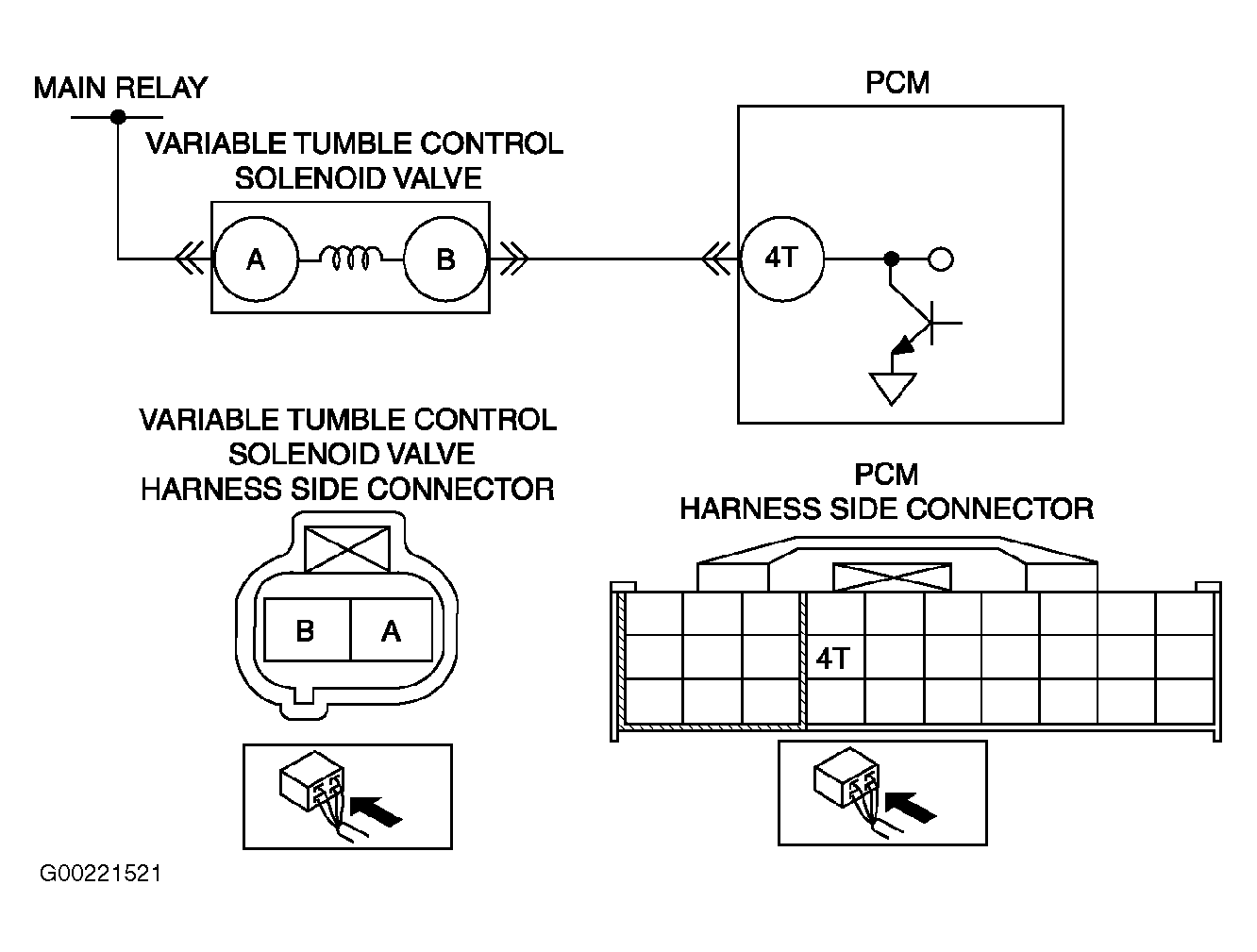 Courtesy of MAZDA MOTORS CORP.
- Inspect PCM Connector For Poor Connection -
Inspect for poor connection (such as damaged, pulled-out terminals, corrosion) at PCM 30-pin harness connector terminal "4T" (Blue/Orange wire). If malfunction is not present, go to next step. If malfunction is present, repair or replace terminal. After repair, go to next step.
- Inspect VTCS Solenoid Valve Control Circuit For Short To Ground -
Check for continuity between VTCS solenoid valve harness connector terminal "B" (Blue/Orange wire) and body ground. If continuity is not present, go to next step. If continuity is present, repair short circuit to ground in Blue/Orange wire between VTCS solenoid valve harness connector terminal "B" and PCM 30-pin harness connector terminal "4T". After repair, go to step 9.
- Inspect VTCS Solenoid Valve Control Circuit For Open Circuit -
Connect VTCS solenoid valve harness connector. Turn ignition on, engine off. Measure voltage between PCM 30-pin harness connector terminal "4T" (Blue/Orange wire) and body ground. See Fig 1. If battery voltage is present, go to next step. If battery voltage is not present, repair open circuit between PCM 30-pin harness connector terminal "4T" and VTCS solenoid valve harness connector terminal "B". See ENGINE PERFORMANCE in SYSTEM WIRING DIAGRAMS article in ELECTRICAL. After repair, go to next step.
- Verify Trouble Shooting Of DTC P2009 Is Completed -
Make sure to reconnect all disconnected connectors. Clear DTC from PCM memory using WDS or equivalent. Turn ignition off. Start engine and warm up completely. If PENDING CODE of same DTC is not present, go to next step. If PENDING CODE of same DTC is present, replace PCM. For PCM removal and installation, see POWERTRAIN CONTROL MODULE
under COMPUTERIZED ENGINE CONTROLS in REMOVAL & INSTALLATION article. After repair, go to next step.
- Verify After Repair Procedure -
Using scan tool, perform After Repair Procedure. See AFTER REPAIR PROCEDURE . If any DTCs are present, go to appropriate DTC inspection. Refer to DIAGNOSTIC TROUBLE CODE DEFINITIONS . If no DTCs are present, trouble shooting is complete.