September 30: LEMON manuals is back up on a temporary server! Slowness is possible
Air Control Valve Circuit
- The Engine Control Module (ECM) controls the air control valve to maintain near atmospheric pressure at front and rear bearings on supercharger. This prevents grease and oil from leaking from the supercharger, due to pressure fluctuation inside the supercharger.
- Check air control valve operation. See AIR CONTROL VALVE under SUPERCHARGER . Replace air control valve if defective. If air control valve operates correctly, access the ECM. The ECM is located below driver's side seat leg, near emergency brake lever.
- Turn ignition on. Using voltmeter, check voltage between terminal No. 20 (Red/White wire) on ECM and chassis ground. See Fig 1.
- Voltage should be 9-14 volts. If voltage is within specification, go to next step. If voltage is not within specification, check for defective EFI main relay or wiring harness between EFI main relay and ECM. See EFI MAIN RELAY under RELAYS. See appropriate wiring diagram in WIRING DIAGRAMS
article.
- Check for defective air hose at air control valve. The air control valve is located on bracket, near radiator. See Figure. If air hose is defective, replace air hose. If air hose is okay, check ECM ground circuit. If ECM ground circuit is okay, substitute another ECM and recheck system operation.
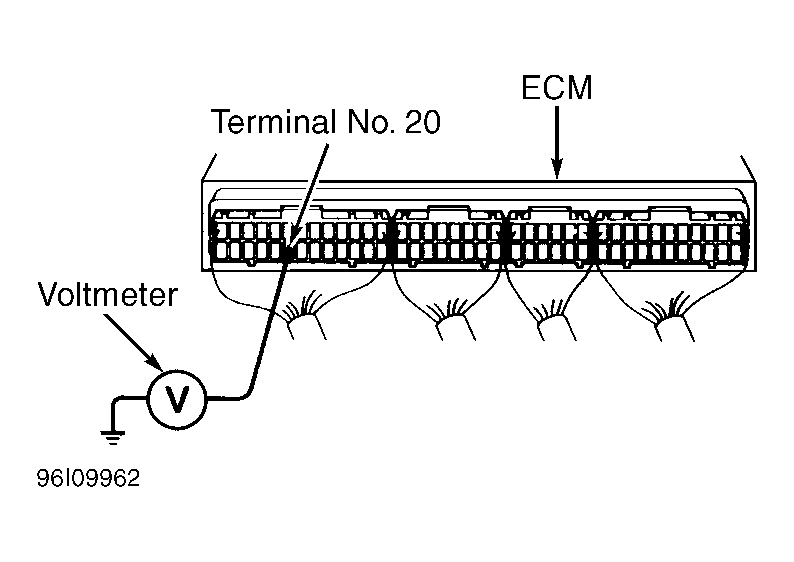 Courtesy of © TOYOTA, LICENSE AGREEMENT TMS1002